

How do you know that your cat needs to lose some weight? Our furry friends nowadays are relatively bulky and heavy, so you might not get an idea they’re overweight or need to slim down a bit. If you’re a cat owner, you would ask yourself “how heavy should my cat be?
We usually tend to spoil our cats and overfeed them often. Increased weight of your cat can be a cause of concern as it can lead to various diseases and health problems. Diabetes (type 2) and worsening arthritis can likely occur. To keep your cat healthy and fit, it is necessary to put off the excess weight.
On the other hand, if your cat is underweight, it could signal an underlying health problem that needs to be looked into as soon as possible.
How Heavy Should My Cat Be?
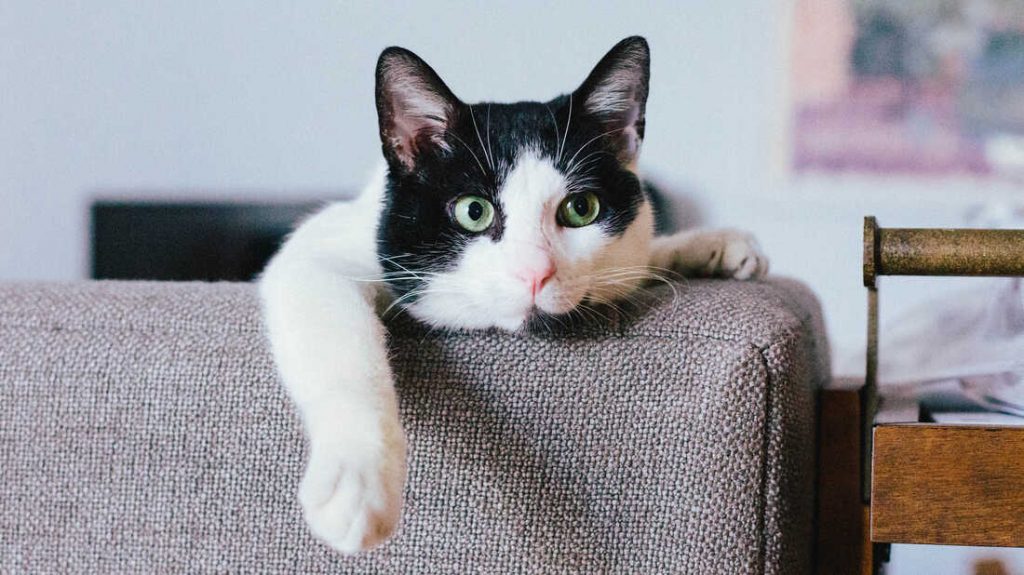
The weight of a cat depends on the breed of the cat to some extent. The average weight also depends on the gender, whether it is male or female. And then there are old cats, young cats and small kittens.
Average weight based on the breed
One of the first factors you should know when asking “how heavy should my cat be” is to know what breed your cat is? With over 80 different breeds of domestic cats, there isn’t a single breed that has an ideal weight. For instance, a healthy Maine Coone may weigh 25 pounds while a Siamese cat may weigh only 5 pounds.
To give you an idea, below I will tell you the ideal weight of some cat breeds:
- Domestic cats: 8-10 lbs.
- Persian cats: 7-12 lbs.
- Siamese cats: 5-10 lbs.
- Maine Coon cats: 10-25 lbs.
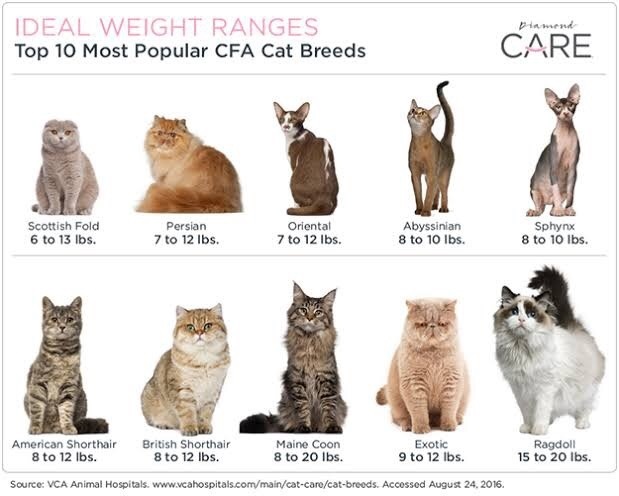
While this information provides a useful benchmark for determining where your cat will appear on the scale, keep in mind that these estimates do not take into account body condition, diet, or habits. cat’s daily routine. If your cat is over or under these numbers, don’t fret – remember that multiple factors affect a cat’s body weight.
Average weight based on gender
Like breed type, gender also plays an important role in how heavy your cat is. In general, male cats tend to be larger, and therefore heavier, than female cats.
A female cat can weigh about 8-12 pounds. For comparison, male cats weigh around 11-15 pounds. So a 15 pound female cat can be considered heavy while it is the average weight of a male cat.
Average weight based on cat’s age
Furthermore, the average weight of a cat also depends on its age. For example, an adult female Maine coon cat can weigh up to 20 pounds. While an adult Himalayan cat weighs only 7 pounds.
Four common purebred species: Siamese, Maine coon, Persian and Himalayan can reach peak weights in 6 to 10 years on average.
The Body Condition Score (BCS)
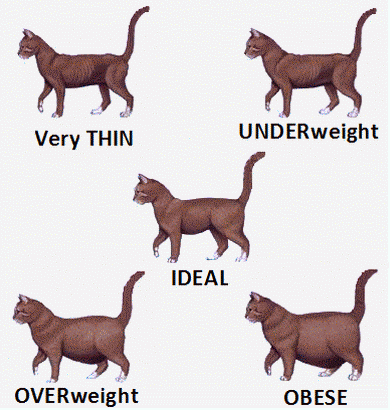
Veterinary experts have developed an organized system for assessing the weight of animals, similar to the Body Mass Index (BMI) for humans. The Body Condition Score (BCS) rates cats on a scale of 1 to 9, with 1 identifying the cat as severely underweight and 9 indicating the cat as obese.
- Point 1: The ribs are prominent, fat is not palpable. Severe abdominal tuck. The lumbar vertebra and the iliac crest can be easily seen. Dramatic waistline.
- Point 2: The ribs are prominent, no fat is palpable. Pronounced abdominal contractions. Lumbar vertebrae are clearly visible. The waistline is severely cracked.
- Point 3: Ribs are visible with minimal fat coverage. Present minimal abdominal fat.
- Point 4: Ribs are firm but have fat around. Minimal abdominal tuck. No belly fat pads. The waistline is prominent with gradually smaller curves.
- Score 5: Ribs are found to have the right amount of fat. The belly fat padding is kept to a minimum. Cats have a balanced body, ideal weight.
- Point 6: The rib is palpable with a little excess fat. The abdominal tuck is absent. The abdominal fat pad is noticeable but not very prominent.
- Point 7: The ribs are deep to the touch, with a moderate amount of fat covering them. An average belly fat pad is present.
- Score 8: No palpable ribs, covered with excess fat. The abdominal tuck is prominent, there are no folds in the abdomen. Lumbar vertebrae are not prominent due to fat deposition. The waistline is not visible.
- Score 9: The ribs are not palpable, covered with a lot of fat. The abdominal fat pad is very prominent. You cannot see the lumbar vertebrae due to excess fat deposition. Deposition of fat on the face and limbs is also present. There is also excess fat deposited on the tip of the tail, covering the pelvis.
How to help your cat maintain a healthy weight?
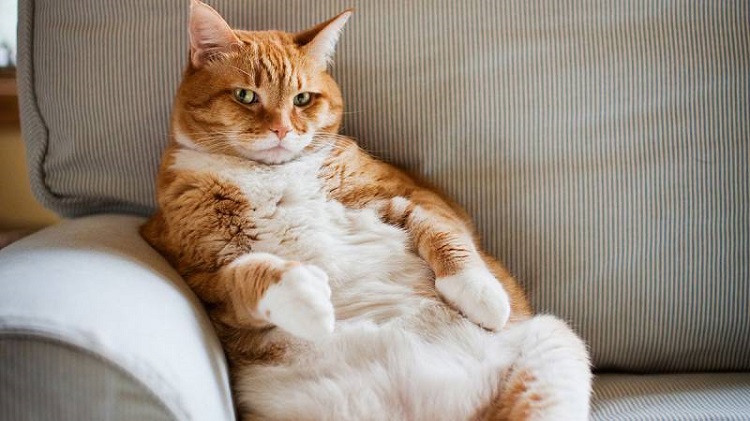
If you are a cat owner and do not want your cat to have weight problems. Here are some tips that can help you maintain a healthy cat weight.
- Provide your cat with a suitable and balanced diet. Get your veterinarian’s help to create the perfect diet plan for your cat’s specific nutritional needs. Ask them how many calories per day are enough for your cat.
- Be sure you don’t over-treat your cat. When your cat eagerly asks for a treat, you can try rubbing her belly instead of treating her.
- Replace all high-calorie foods with low-calorie treats. Always remember that junk food should be no more than 10% of your cat’s daily calories and it’s important to reduce food intake accordingly.
- Engage your cat in regular physical activities. There is no exact amount of exercise a cat should do each day. But most experts say 30 minutes of exercise a day is enough for cats.
- It might also be a good idea to keep their food bowl away from them and make them walk in that direction.
Plus, when you’re looking for ways to help your pet lead a healthy life, CBD oil comes in abundance. Asher House Wellness is a reliable place if you want to find quality and affordable CBD oils.
Conclusion
Always check your cat’s diet and see your veterinarian to learn more about what foods are right for them. Regularly check their weight and follow.
So it’s all about how heavy should my cat be?
Now we hope that this post was useful to you.
More articles that may help you: